A book without an ISBN is, to most of the trade, invisible. A book without a barcode on the back cover cannot be sold in a shop. And a book that never reaches a legal deposit library leaves its UK publisher technically on the wrong side of the law. None of these three things is difficult, but they do need doing in a sensible order — and the order catches people out far more often than the paperwork does.
What an ISBN actually is
An ISBN — International Standard Book Number — identifies one edition of one book in one format. That is the entire job description. It is not a copyright registration (the UK has no register of copyright to join), not a licence to publish, and not protection for your title. It is a catalogue number that tells the supply chain: this is a single, distinct product.
The 13 digits break into five parts: the prefix (978 or 979), the registration group for the country or language area, the publisher element, the title element, and a check digit that software can verify. Because the number belongs to a format rather than to a text, a paperback and a hardback of the same novel need two ISBNs, and so do the print and ebook editions.
You will need a separate ISBN for:
- each physical binding — hardback, paperback, large print
- your ebook edition (one number usually covers the file types you sell of that same ebook)
- an audiobook, whether on CD or as a download
- a new edition with substantial changes to the content
- a book that changes title
You do not need a new one for a straight reprint, a price change, or a tidy-up of typos. Reusing a number across two genuinely different products is the mistake that causes the most grief later: retailers merge the listings, and your sales data becomes nonsense.
Getting an ISBN in the UK
ISBNs for the UK and Ireland are issued by Nielsen BookData, the national agency. You buy them in blocks, and the block is registered against your publishing name — which means the publisher recorded on the number is you, not a platform. That matters enormously if you ever want to move.
Free ISBNs exist. Amazon's KDP and several other services hand them out, and if your book will only ever live on that one platform, they are perfectly usable. Read the small print first, though: platform-issued ISBNs typically tie the book to that retailer and record the platform as publisher of record. If you intend to sell through wholesalers, libraries or your own website, buy your own block.
Once you have the number, register your book's metadata with Nielsen — title, author, format, price, publication date, subject codes and a short description. This is the database retailers and libraries order from. Get it in place three or four months before publication and you avoid the classic first-book problem: a title that exists, is printed, and cannot be ordered by anyone.
Barcodes: dull, standard, easy to get wrong
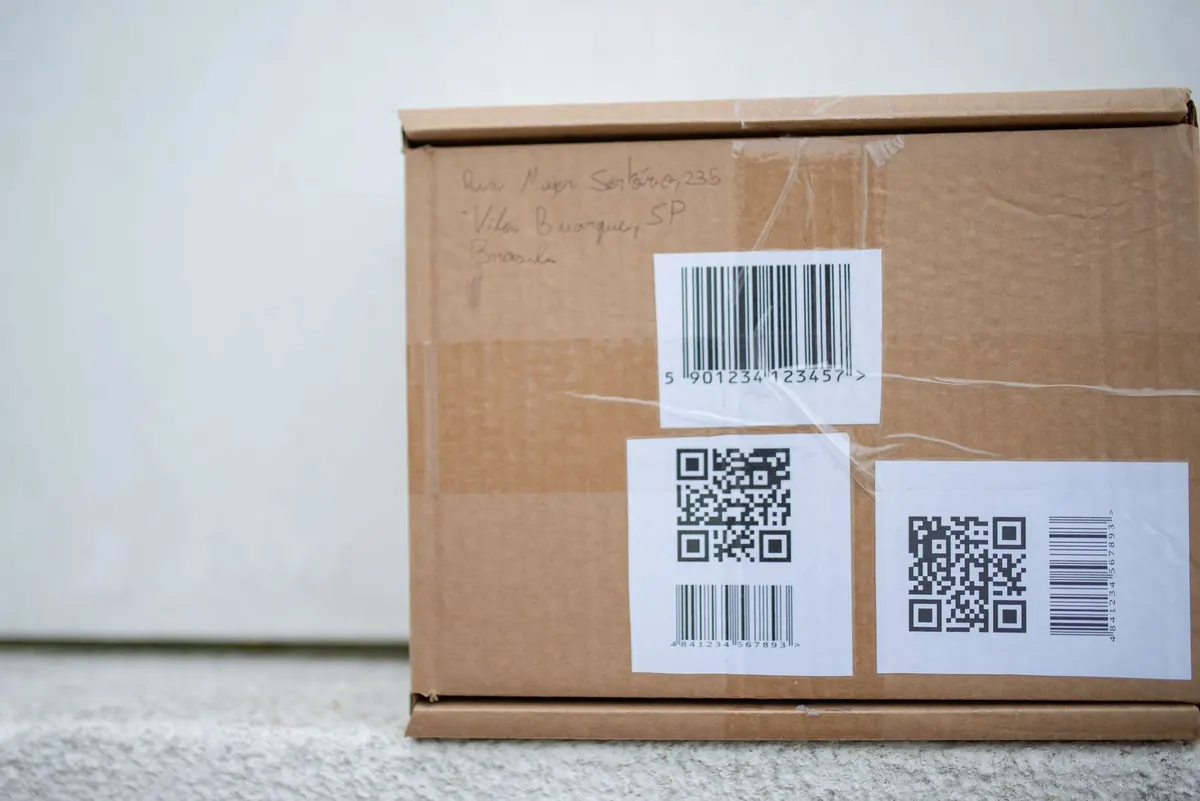
The barcode on the back cover is an EAN-13, the same symbology as a tin of beans, and it simply encodes your ISBN. Once you have the number, your ISBN supplier will usually give you a barcode file, or your designer can generate one. Do not redraw it by hand, do not stretch it to fit a space, and do not let anyone "tidy it up".
The rules for placing it are short:
- Back cover, lower right is the convention buyers and booksellers expect
- Black bars on a plain light background — not over a dark, glossy or heavily patterned area
- A clear quiet zone of a few millimetres either side, with no text or artwork inside it
- The human-readable digits printed above the bars, not below
- Keep it inside the trim, and keep stickers, price labels and folds well away
- Scan the printed proof with a real till scanner before you sign off the run
Hardbacks with dust jackets carry the barcode on the jacket. Ebooks have no barcode at all — the ISBN travels in the metadata instead. A price add-on bar is optional and generally not worth the trouble; change your price and the cover is wrong.
Legal deposit: the part nobody warns you about
Under the Legal Deposit Libraries Act 2003, every printed work published in the UK must be deposited. One copy goes to the British Library; the other five libraries may claim a copy, normally within twelve months of publication. Non-print works, including ebooks, fall under later regulations and are deposited with all six.
- The British Library
- The Bodleian Libraries, University of Oxford
- Cambridge University Library
- The National Library of Scotland
- The National Library of Wales
- Trinity College Dublin, which takes part under a longstanding separate arrangement
Self-publishers are covered by this. "Published in the UK" describes where the book is made available, not whether a company was involved. Print fifty copies of your own memoir and sell them and you are a publisher for these purposes.
In practice: send the British Library copy promptly after publication. The Agency for the Legal Deposit Libraries, based in Edinburgh, handles claims on behalf of the other five, so those requests will arrive from them. Digital deposit is usually arranged through the British Library's service for non-print works. Depositing does not hand over your copyright, and libraries will not reproduce your book without permission. Penalties can apply for non-compliance, so treat it as a real obligation rather than an optional courtesy — and if your circumstances are unusual, take advice from the libraries themselves or a publishing solicitor. The guidance above is general, not legal advice.
A sensible order of operations
- Decide your formats — paperback, hardback, ebook, audio — before you buy anything.
- Buy your ISBNs and note which number belongs to which format.
- Register the metadata with Nielsen, well ahead of your publication date.
- Generate the barcode, place it to spec, and scan a proof.
- Publish, then deposit the print copy with the British Library and answer any claims from the Agency.
- Deposit digital editions through the correct route for non-print works.
Start with these five jobs
Buy your ISBNs before you commission a cover, because the number has to be on it. Write your metadata once, carefully, and reuse it everywhere. Print a single proof copy and scan the barcode with your phone before the full run. Diarise your legal deposit deadline the day your book goes on sale. And keep a simple spreadsheet of numbers, formats and deposit dates — future you, three books from now, will be grateful.
Photo: Kampus Production / Pexels